
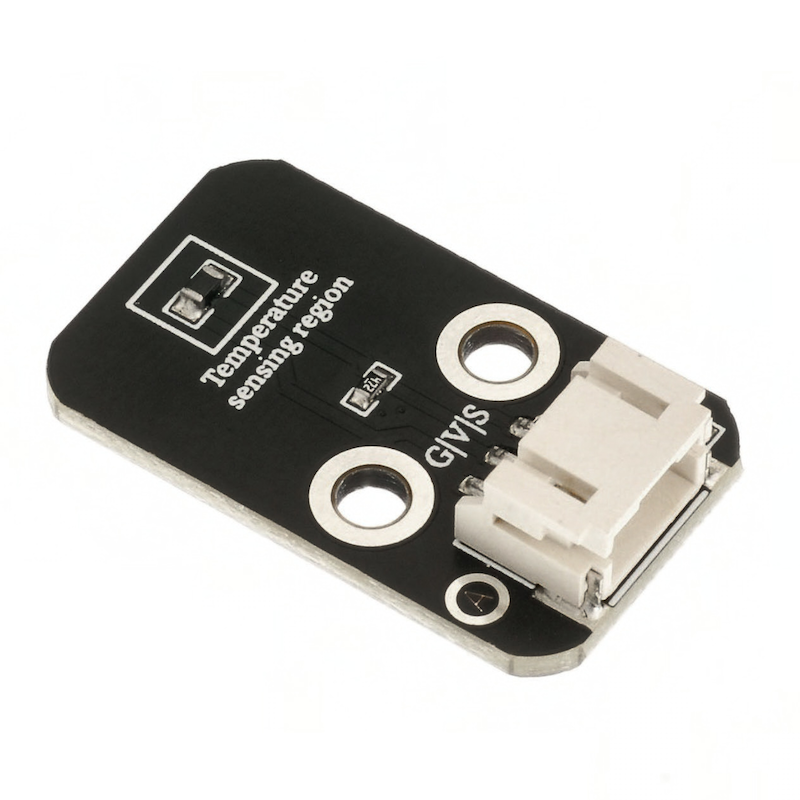
1. Introduction
Thermistor is a type of sensitive component, which is divided into positive temperature coefficient thermistor (PTC) and negative temperature coefficient thermistor (NTC) according to the temperature coefficient.The typical characteristic of a thermistor is its sensitivity to temperature, showing different resistance values at different temperatures.Positive temperature coefficient thermistor (PTC) has a higher resistance value as the temperature increases, while negative temperature coefficient thermistor (NTC) has a lower resistance value as the temperature increases. They both belong to semiconductor devices.
2. Schematic
HS-S35P thermal sensor schematicClick to view
Module Parameters
Pin Name | description |
|---|---|
G | GND (Negative Power Input) |
V | VCC (Positive Power Input) |
S | Analog Signal Pin |
Power Supply Voltage: 3.3V / 5V
Connection Method: PH2.0 Terminal Wire
Installation Method: Double Screw Fixed
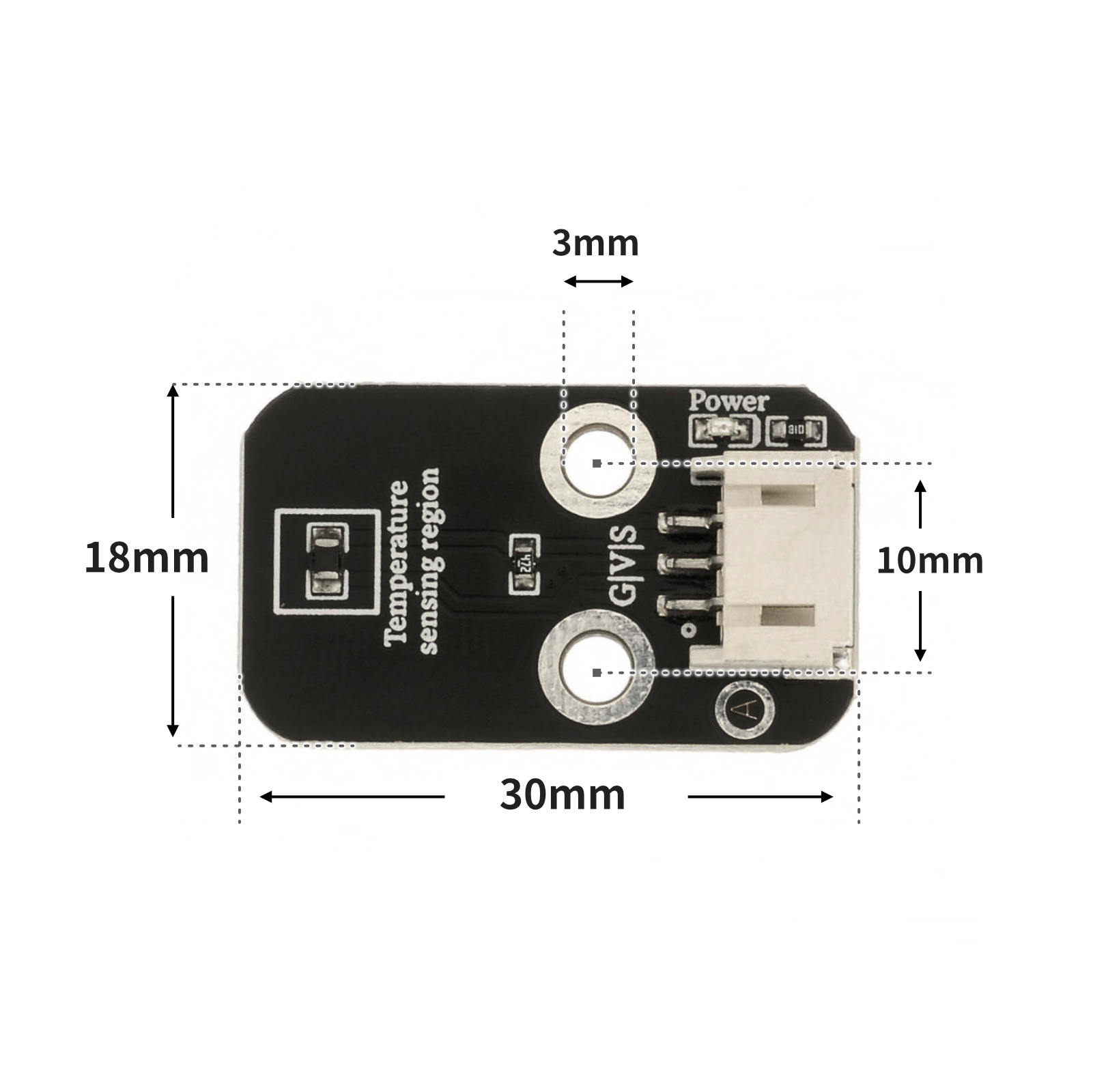
4, Circuit Board Size
5 of Arduino IDE example program
Attention: If prompted with an error message about the library file during program upload, please import the library file first!
Arduino IDE Library Download and Import Tutorial:Click to view
Example program (UNO development board):
volatile int value;//定义热敏传感器模拟值变量

void setup(){
  value = 0;
  Serial.begin(9600);//设置波特率
  pinMode(A0, INPUT);//定义A0为输入引脚
  pinMode(6, OUTPUT);//定义6为输出引脚
}

void loop(){
  value = analogRead(A0);//获取热敏电压模拟值
  Serial.print("Thermal Data:");
  Serial.println(value);//打印热敏电压模拟值
  if (analogRead(A0) > 380) {//判断热敏值是否大于380
    tone(6,196);//6号蜂鸣器响起

  }
  delay(200);
  noTone(6);//6号蜂鸣器不响

}
6, ESP32 Python Example (for Mixly IDE/Misashi)
Choose the development board Python ESP32 [ESP32 Generic(4MB)] and upload in code mode
Attention: If prompted with an error message about the library file during program upload, please import the library file first!
Download and import tutorial for Mixly IDE ESP32 library:Click to view
Example program (ESP32-Python):
import machine
import music


adc32 = machine.ADC(machine.Pin(32))
midi = music.MIDI(4)
while True:
    print(adc32.read_u16())
    if adc32.read_u16() > 40000:
        midi.pitch_time(440, 2000)
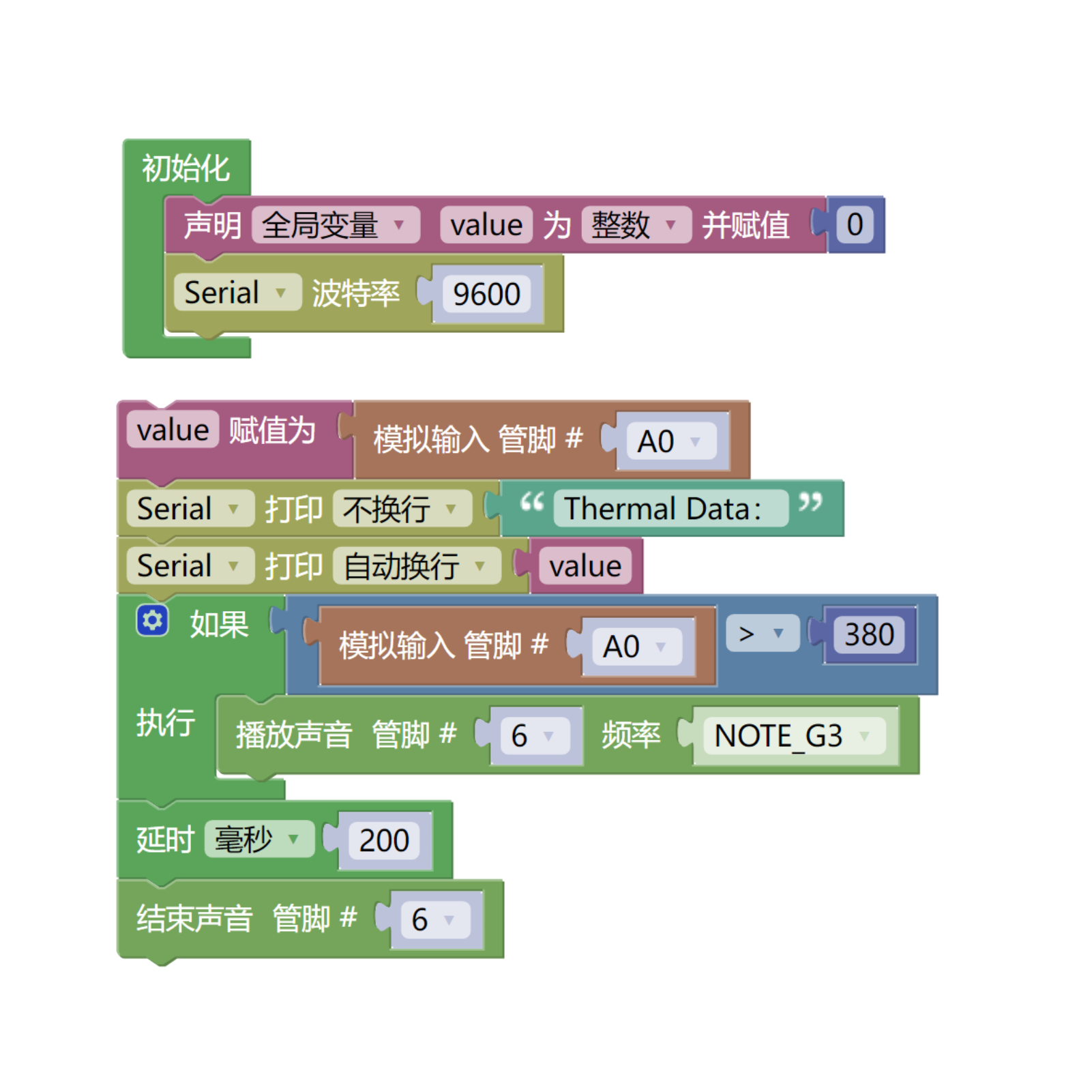
7, Mixly example program (graphical language)
Example program (UNO development board):Click to download
Attention: If prompted with an error message about the library file during program upload, please import the library file first!
Download and import tutorial of Mixly IDE Arduino library:Click to view
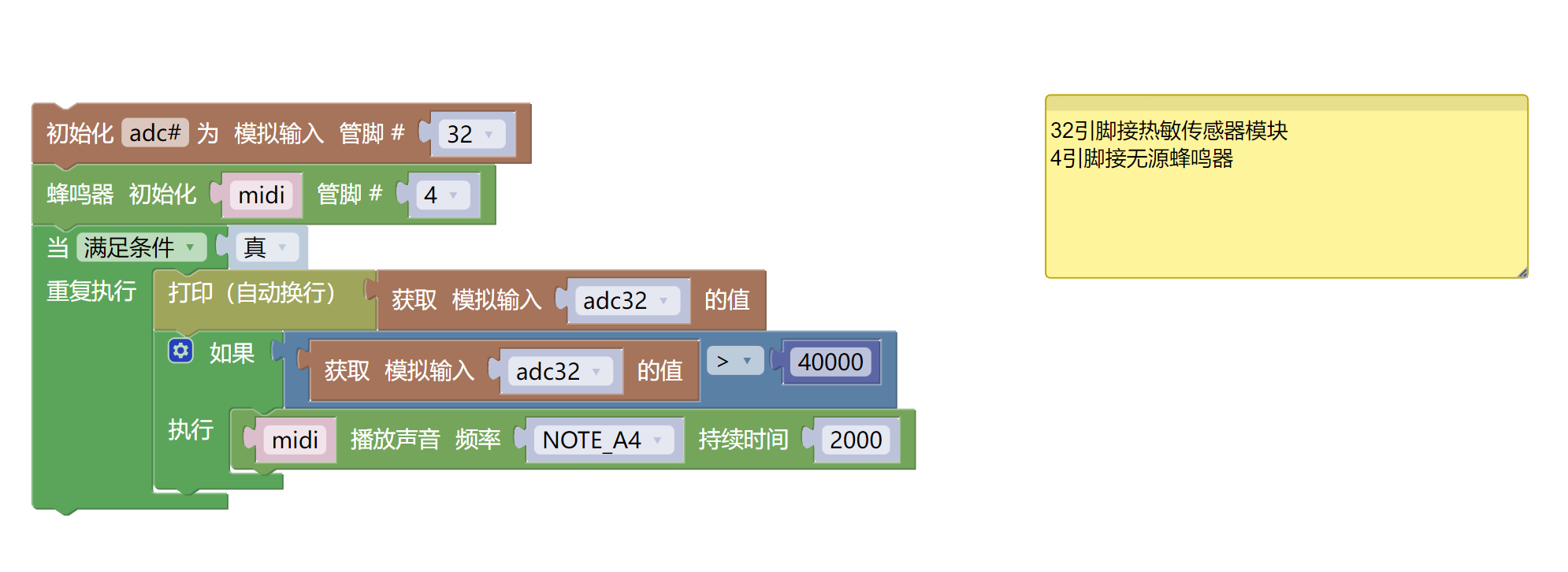
Example Program (ESP32 Development Board):Click to download
Attention: If prompted with an error message about the library file during program upload, please import the library file first!
Download and import tutorial for Mixly IDE ESP32 library:Click to view
7, Test Environment Setup
Arduino UNO Test Environment Setup
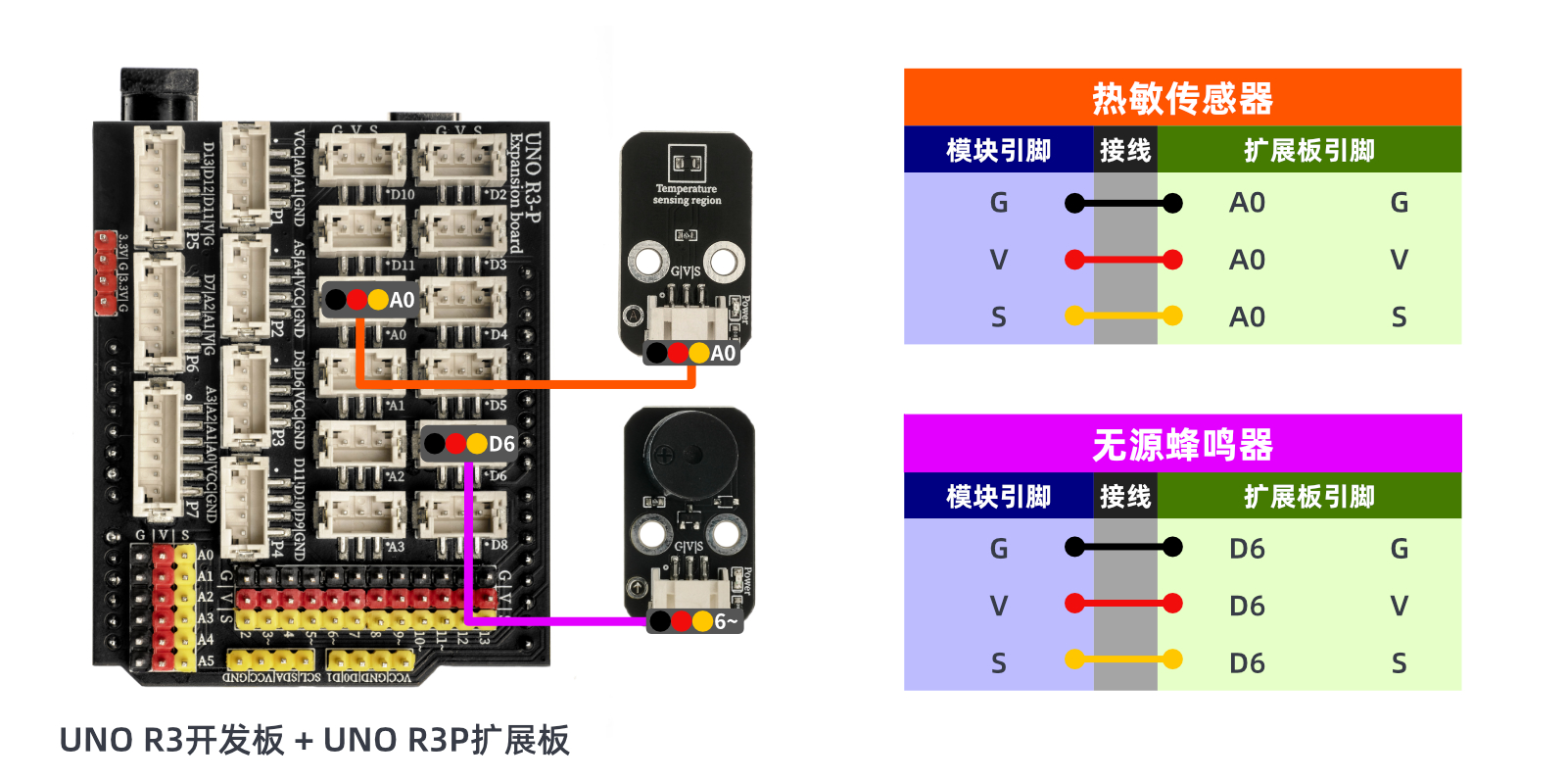
Prepare Components:
HELLO STEM UNO R3 DEVELOPMENT BOARD *1
HELLO STEM UNO R3 P EXPANSION BOARD *1
USB TYPE-C DATA CABLE *1
Thermistor Sensor (HS-S35P) *1
Passive Buzzer (HS-F02P) *1
PH2.0 3P dual head terminal line *2 pieces or PH2.0 3p terminal to DuPont wire *2 pieces
Circuit wiring diagram:
ESP32 Test Environment Setup
Prepare Components:Pending update...
Circuit wiring diagram:Pending update...
9, Video tutorial
Video tutorial:Click to view
10, Test results
Arduino UNO test results:
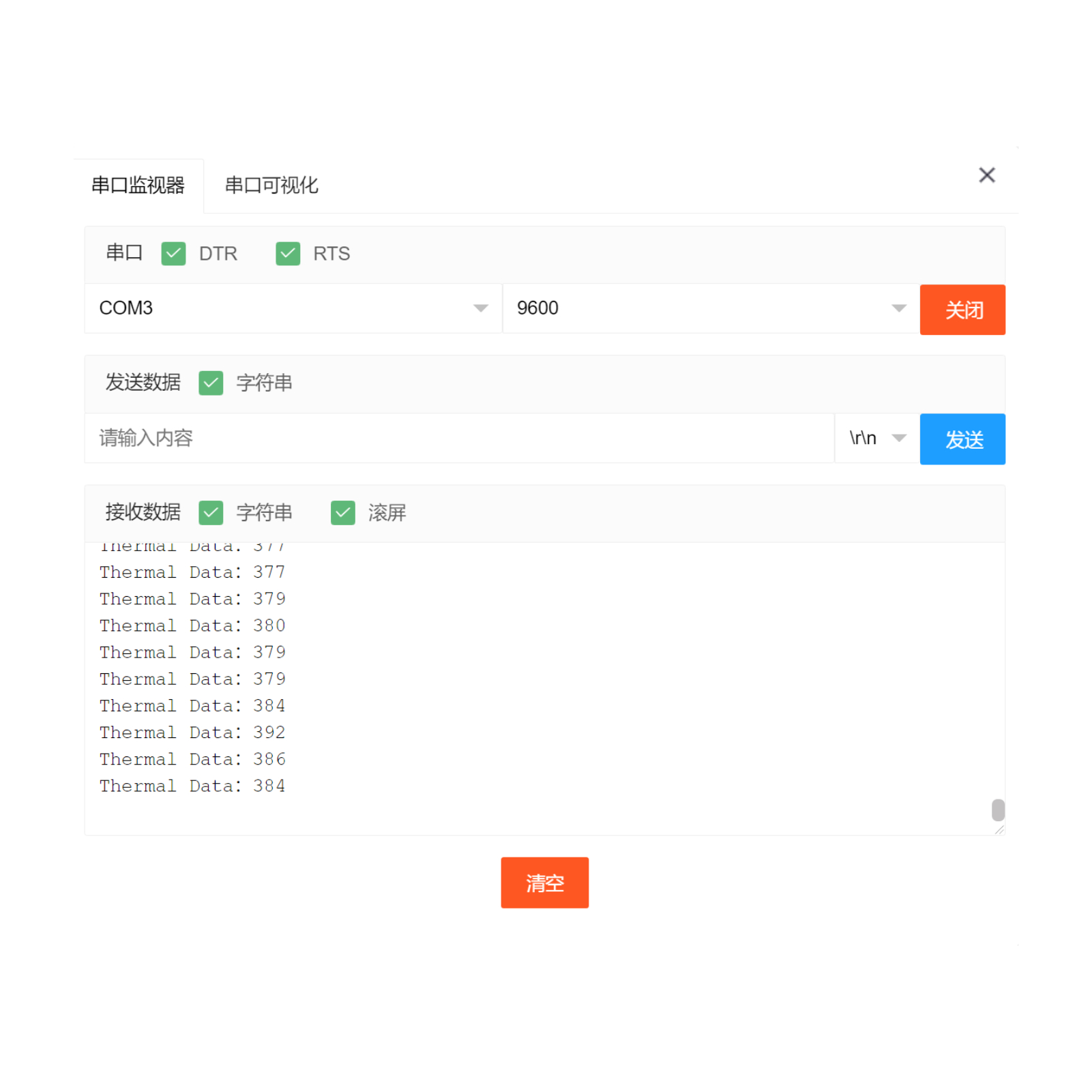
After the device is connected to the line, burn the above program to the Arduino UNO development board, open the serial monitor, set the baud rate to 9600, when the surrounding temperature rises to a certain level, the passive buzzer will sound an alarm. At this time, you can check the value printed in the serial monitor. You will find that the simulated value is smaller when the surrounding temperature is low than when it is high.
ESP32 Test Results:
Pending update...